Resources · Reading

What I Would Put
In Your Hands

Books and papers I recommend without hesitation, gathered here because a convert deserves better than a search engine when she is trying to understand her own faith. Everything on this page has shaped how I think about conversion, culture, and the cultivation of Muslim identity.

Featured Book

A book I recommend, and contributed to

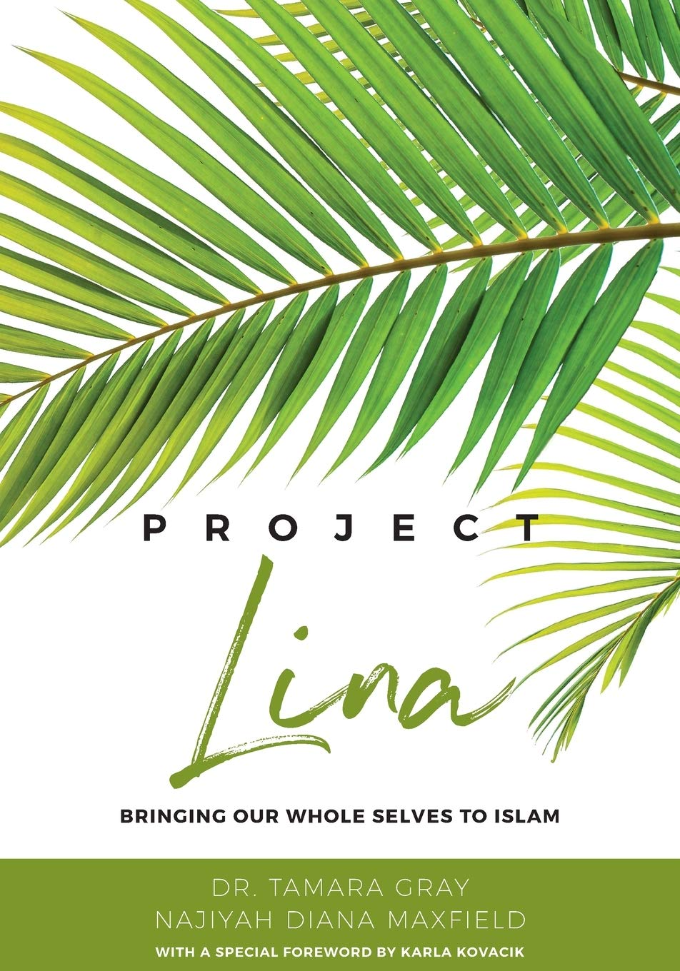
Project Lina: Bringing Our Whole Selves to Islam

Project Lina

Bringing Our Whole Selves to Islam

Dr. Tamara Gray · Najiyah Diana Maxfield
With a special foreword by Karla Kovacik

If you are new to Islam, or a woman looking toward marriage, this is the book I would put in your hands first. Lina is the Arabic word for palm tree, and its three modules, Know Yourself, Declare Independence, and Tend Your Ties, give a convert something to grow from: deep roots, a trunk both strong and flexible, and fruit that sustains.

I wrote the foreword, drawing on the findings of the Feeling Muslim study, and in the back of the book is an excellent pre-marital questionnaire by my dear friend Andrea Cluck Annaba, may Allah have mercy on her soul.

Forthcoming

The work I am waiting for

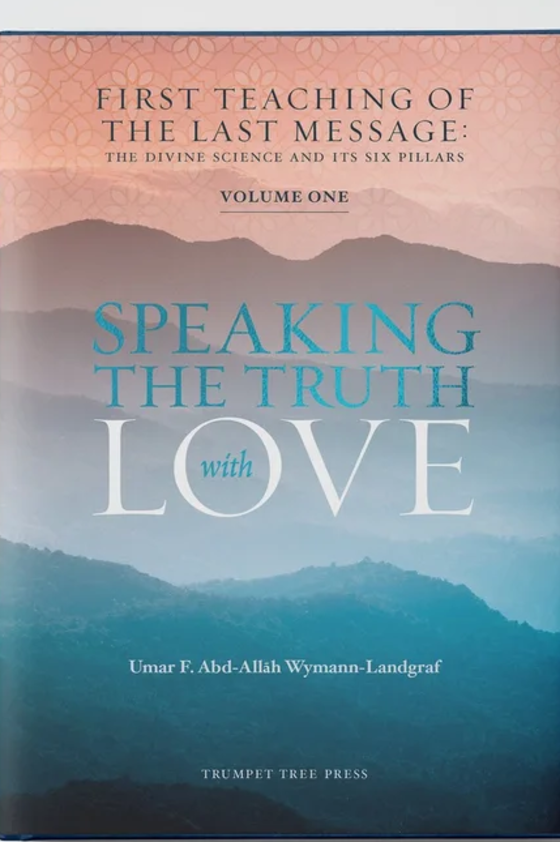
First Teaching of the Last Message, Volume One: Speaking the Truth with Love
Forthcoming 2027

First Teaching of the Last Message

The Divine Science and Its Six Pillars · Volume One: Speaking the Truth with Love

Dr. Umar Faruq Abd-Allah Wymann-Landgraf · Trumpet Tree Press

An eight-volume compendium intended as a reliable, wide-ranging, and in-depth reference to the six foundational Pillars (Arkān) of Islam's timeless and universal Prophetic Message. Its subject matter is designed to explain in the fullest sense the fathomless meanings, explicit and implicit, in Islam's two-part Prophetic testimony of faith.

Lā ilāha ill-Allāh · There is no god but God
Muḥammadun Rasūlu-Llāh · Muhammad is God's Messenger

In Arabic, the word Islam refers to the act of freely rendering submissive obedience to God, and all aspects of Islam, inwardly and outwardly, are included in that two-fold creedal witness.

The six Buttresses of Prophetic credence: belief in God, the Angels, the Revealed Books, the Prophet-Messengers, the Resurrection, Last Judgment, and Hereafter, and Providence and the Foreordination of all things, including good and evil.

The Pillars are presented from two complementary perspectives: basic creedal and doctrinal belief as the individual responsibility (farḍ al-ʿayn) of every believer of sound mind and body, and sound non-creedal understanding within the far broader societal obligation (farḍ al-kifāya) of the whole World Community of Islam (al-Umma), falling more specifically on the shoulders of an adequate number of qualified Muslim scholars who must correctly answer the faith-related questions of our generation.

That second perspective is vastly more extensive in scope, though less rigorous in its epistemological and demonstrative demands, and it takes in all faith-related matters, big and small, essential and non-essential, that concern the World Community of Islam and present-day humanity as a whole. The First Teaching is attentively fixed on this all-inclusive perspective, which accounts for the compendium's detail and length, and the majority of the work falls under those overreaching needs and interests of any healthy contemporary society, culture, and Civilization (al-ʿUmrān).

It seeks to respond as effectively as possible to the primary issues and burning controversies of our era, engaging the reigning doubts, flawed paradigms, and fallacies of Muslims and non-Muslims alike.
Essential Papers

The Nawawi Foundation Papers of
Dr. Umar Faruq Abd-Allah

Written between 2002 and 2008 during his time as resident scholar with the Nawawi Foundation, these seven monographs challenged many of the ideas about Muslim identity that were prevalent in the United States in the 1990s and early 2000s. They are still frequently read and studied today, in the academy and informally, and they are foundational to how this project thinks about culture and conversion. Each one is free.

01

One God, Many Names

Addresses the primordial origin of the divine names of God in order to establish the equivalency of the Biblical “God” to Islam’s “Allāh,” and the need for American Muslims to embrace both. A paper with particular weight for converts who came to Islam from a Christian or Jewish background and were told the God of their childhood was a different God.

Read or download

02

Mercy, the Stamp of Creation

Examines the role of mercy in the Islamic tradition and in eternal salvation, and its imprint on all affairs of the universe. Although Islam is often proclaimed the “religion of peace,” Dr. Umar argues that theologically it is more accurate to call it the religion of mercy.

Read or download

03

Islam & the Cultural Imperative

For centuries, Islamic civilization harmonized indigenous forms of cultural expression with the universal norms of its sacred law. This is the paper I return to most often in this work, because it makes the case that a convert does not have to trade her culture for her faith.

Read or download

04

Living Islam with Purpose

A companion to Islam and the Cultural Imperative, offering an operational framework for accomplishing the task: five operational principles, discussed at length and illustrated with examples.

Read or download

05

Innovation & Creativity in Islam

On Islam as a global religion whose historical success arises in part from the simplicity of its message and its ability to make itself relevant to different times and peoples.

Read or download

06

Turks, Moors, & Moriscos in Early America

Focuses on the first British colony in the New World, the so-called “lost colony” of Roanoke (1585–1590), and the Muslim presence in early America. Useful history for any American Muslim told that Islam is foreign to this country.

Read or download

07

Seek Knowledge in China

Casts light on Islam’s long history in China and the cultural genius of its indigenous Muslims, who fashioned a way of life that preserved their Islamic identity while making them active participants in the highly developed non-Muslim civilization around them.

Read or download

A note on these papers

All seven papers are the work of Dr. Umar Faruq Abd-Allah and are published by The Oasis Initiative, which holds the rights to them. Each link above opens the paper on the Oasis site, where it can be read and downloaded from the source. Please consider supporting their work, which keeps this scholarship freely available.

More to come

This page will grow. Recommended reading on the convert experience, the sciences of the heart, and the project’s own published work will be added here, in shā Allāh Taʿālā.